By Your Local Driving Academy Editorial Team · Updated 2026-09-06
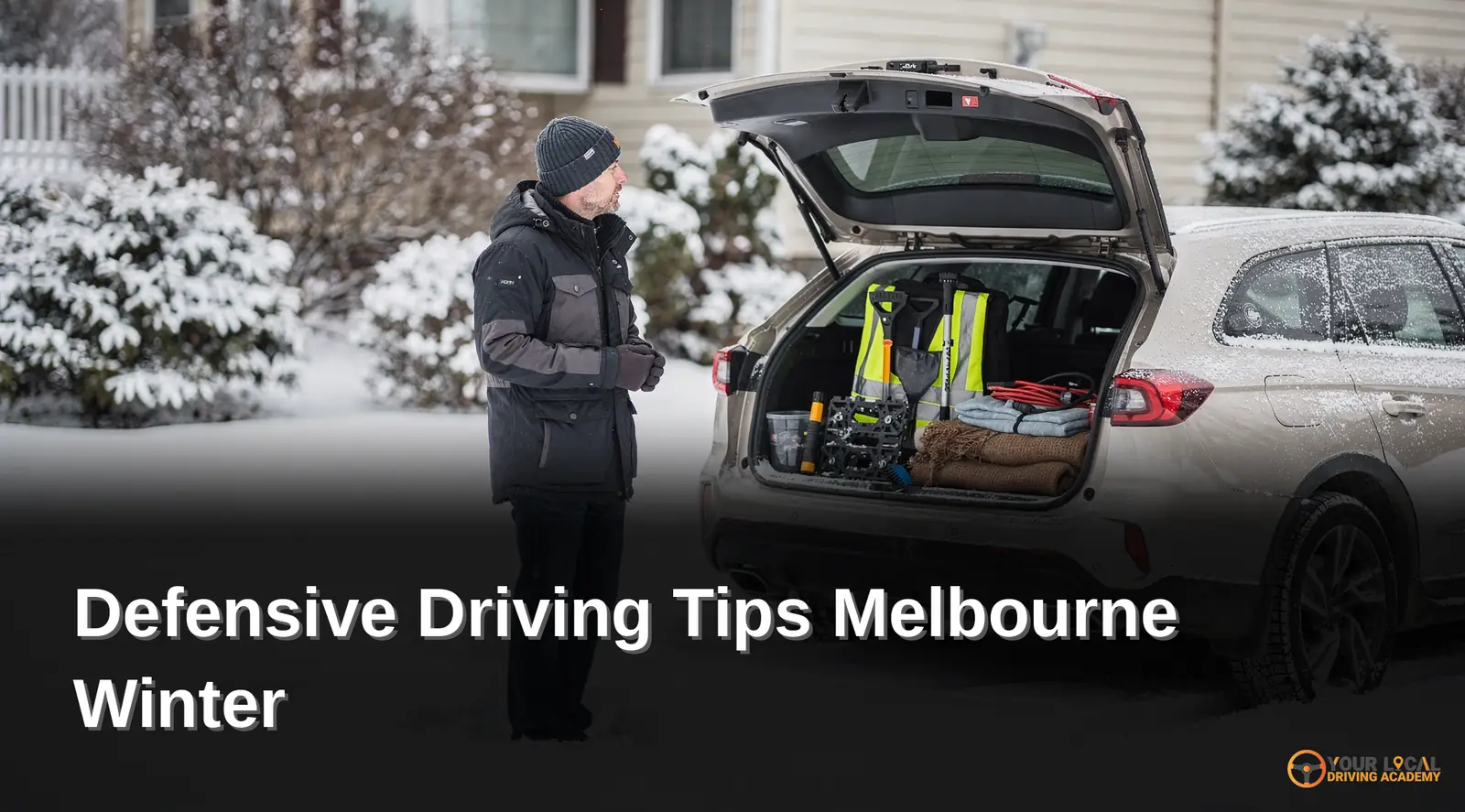
Defensive driving in Melbourne winter requires slower speeds, longer following distances, and heightened awareness of fog and wet roads. Your Local Driving Academy trains learner. P-plate drivers through structured lessons that build hazard perception and braking control, addressing reduced visibility and slick surfaces common across metropolitan Melbourne’s winter driving conditions.
Key Takeaways
- Defensive driving classes teach decision-making skills that help drivers navigate Melbourne’s wet winter conditions safely.
- Winter fog and reduced morning visibility in Melbourne require specific techniques covered in defensive driving training.
- Your Local Driving Academy’s 12-person team delivers instruction on maintaining vehicle control during icy and wet road conditions.
- Defensive driving habits reduce accident risk for both experienced drivers and learners facing challenging winter weather.
What Do You Need Before Winter Driving Practice?
Preparation determines whether a Melbourne winter lesson builds confidence or invites risk. Wet roads, darker mornings, and unpredictable fog change driving demands across the city, requiring specific gear and mindset adjustments before a learner ever starts the engine. Skipping this preparation leaves probationary drivers Melbourne driving test.
Three items matter most before a winter practice session begins.
- Check tyre condition first. Winter-appropriate tyres deliver more traction on wet and icy surfaces because of specialized tread patterns and rubber compounds designed for colder temperatures.
- Confirm the vehicle’s safety rating. Modern dual-control vehicles with high ANCAP safety ratings allow structured practice of defensive driving techniques and road craft without added mechanical risk.
- Schedule a defensive driving class. Structured instruction gives learners real support and direct feedback while practicing in poor weather, rather than guessing at correct responses under pressure.
What gear should a P-plater check before driving in Melbourne winter conditions?
Tyre tread depth and condition come first, since traction loss on wet asphalt causes many winter incidents. Working headlights and demisters matter too, given the shorter daylight hours and frequent fog. A learner should also verify wiper function and washer fluid levels before any lesson.
Why does instructor-led practice matter more in winter?
Independent practice in fog or heavy rain leaves new drivers without correction when they misjudge stopping distance or visibility. A qualified instructor provides immediate feedback in the moment, turning a hazardous situation into a defensive driving tips melbourne learning opportunity instead of a near-miss.
How Do You Adjust for Wet and Foggy Roads?
Melbourne motorists reduce speed, extend following distance, and switch to low-beam headlights the moment rain or fog cuts visibility. Wet winter conditions change vehicle behavior in measurable ways: braking distances stretch, turns feel sharper, and hazards appear later than a driver expects. Melbourne’s wet mornings, early darkness, and sudden fog patches call for a different set of habits than dry-season driving.
Learner and probationary drivers gain the most from structured practice. Defensive Driving Course Melbourne: Essential Skills for Safer Roads builds calm judgment rather than rule memorization alone. Structured lessons give newer drivers a supported setting to rehearse these defensive driving tips melbourne motorists rely on before conditions turn unpredictable.
Adjusting for wet or foggy roads follows a consistent sequence:
- Slow down before entering a curve, not during it.
- Double the following distance behind the vehicle ahead.
- Switch to low-beam headlights; high beams scatter light in fog and worsen glare.
- Scan the road edges and lane markings instead of fixating on taillights.
- Apply smooth, gradual steering and braking inputs rather than sudden corrections.
Why do experienced drivers still struggle in wet conditions?
Even seasoned Melbourne motorists find slick, compromised road surfaces intimidating to manage. Reduced traction limits steering response and stopping ability regardless of years behind the wheel. Deliberate practice with these adjustments builds the reflexes drivers need once roads turn unpredictable.
What habits protect other road users, too?
Adopting the habits taught through formal driving school instruction safeguards both the driver and everyone sharing the road. Consistent brand identity and professional recognition give Melbourne learners a dependable framework for that instruction, reinforced across every lesson booked with Your Local Driving Academy. Building these habits early carries learners safely from their first wet-season drive through to full licensure.

How Do You Increase Following Distance and Braking Control?
Extending the gap between vehicles gives Melbourne drivers more time to react when wet roads or fog reduce visibility. Advice for Safe Winter Driving | Melbourne Guide notes that a safe following distance on dry roads runs 3 to 4 seconds, a margin that shrinks fast once rain, fog, or debris covers Melbourne’s arterial roads and freeways. Extending that gap on slick surfaces gives a driver more room to stop without contact.
Following distance means nothing without correct braking technique behind it. Vehicles equipped with anti-lock braking systems (ABS) require firm, steady pressure. Non-ABS vehicles call for controlled, pumping brake pressure to avoid wheel lock-up. Melbourne learners practicing these defensive driving tips melbourne instructors teach gain a clear sense of how their specific vehicle responds under hard braking, rather than guessing during an actual emergency.
Raising a driver’s awareness of speed, reaction time, and stopping distance forms a core part of structured defensive driving education. A driver who understands how these three factors interact makes sharper decisions before a hazard appears, not after.
How Does Skid Control Fit Into Braking Practice?
Skid control training addresses what happens when traction disappears mid-brake. Learners study what causes a skid, how to recognize it early, and how to correct steering and pressure to regain control. This knowledge matters most on Melbourne’s wet winter mornings, when black ice and standing water appear with little warning.
Consider this progression for building braking confidence:
- Identify current following distance using a fixed roadside marker.
- Add extra seconds of gap once rain or fog reduces visibility.
- Practice firm, steady ABS braking versus controlled non-ABS pumping in a safe setting.
- Review reaction time and stopping distance at varying speeds.
- Learn skid causation signs and rehearse correction techniques with an instructor.
How Do You Prepare Your Vehicle for Melbourne Winter?
Vehicle preparation for a Melbourne winter starts with the tyres, not the engine. Melbourne’s wet roads, sudden fog, and cold mornings demand equipment built for reduced grip, and skipping this step raises the risk of skidding or losing control on slick streets. Drivers who wait until conditions turn bad often find themselves without the traction they need at the exact moment it matters most.
Follow these steps to ready a vehicle before winter conditions set in around Melbourne:
- Fit winter-appropriate tyres before the cold season begins, since specialized tread patterns and rubber compounds grip snow and ice far better than standard tyres.
- Check tyre flexibility ratings, because winter tyres stay more pliable in low temperatures than all-season tyres, which directly improves stability and grip on wet Melbourne roads.
- Adjust the seating position so the driver maintains full control of the steering wheel and pedals without straining.
- Confirm clear sightlines through every window and mirror, since reduced visibility compounds the danger of foggy Melbourne mornings.
- Review steering habits, keeping both hands positioned for quick, controlled correction if the car begins to slide.
Why Does Seating Position Matter for Winter Driving?
Correct seating, vision, and steering form the foundation of vehicle control taught in defensive driving tips Melbourne instructors emphasize during lessons. A driver seated too far from the wheel loses reaction speed exactly when quick correction counts most.
What Role Does Vehicle Dynamics Knowledge Play?
Understanding basic vehicle dynamics allows a driver to anticipate how the car shifts weight under braking or cornering. This awareness becomes critical once road surfaces turn wet or icy. A car’s behavior changes without warning in those conditions.
What Mistakes Should New Drivers Avoid This Winter?
New drivers on Melbourne roads lose more than time when they hesitate at a wet intersection or slick roundabout. Freezing up or guessing under pressure ranks among the most common and preventable errors probationary drivers make during winter months. VicRoads Driving Test Preparation Tips for Melbourne Learners replaces panic only when practiced in advance, not invented on the spot during a skid near a Melbourne CBD tram line.
A second mistake runs deeper than technique. Many new drivers overlook how their own attitudes, motivations, and risk-taking tendencies shape choices behind the wheel. Speeding to beat a yellow light, tailgating in heavy rain, or underestimating fog on the Eastern Freeway all trace back to mindset, not just skill. Structured driver education addresses this gap directly, building awareness of how personal habits affect road safety for everyone sharing Melbourne’s streets.
Why Does Practicing in Bad Weather Matter More Than Reading About It?
Reading a road rules booklet cannot replicate the feel of a car losing traction on a wet Melbourne road. Hands-on practice in real winter conditions builds instinct, not just knowledge. These skills carry forward for years, extending well past a single wet season.
New drivers preparing for winter should avoid these habits:
- Relying on guesswork instead of rehearsed responses during sudden hazards
- Ignoring personal risk-taking patterns behind the wheel
- Skipping practical, weather-specific practice sessions
Applying defensive driving tips melbourne learners can trust starts with correcting these three errors early.
FAQ
What should P-platers check before a winter driving lesson in Melbourne?
Check tyre tread and condition for traction on wet surfaces. Confirm headlights, demisters, wipers, and washer fluid work properly given shorter daylight and frequent fog.
Why does instructor-led practice matter more during Melbourne winter?
Independent practice leaves new drivers without correction when they misjudge stopping distance or visibility. A qualified instructor gives immediate feedback, turning hazards into learning opportunities instead of near-misses.
How should drivers adjust their habits for wet and foggy Melbourne roads?
Reduce speed, extend following distance, and switch to low-beam headlights once rain or fog cuts visibility. Braking distances stretch and hazards appear later than in dry-season driving.
Conclusion
In closing, defensive driving during Melbourne’s winter months demands deliberate skill development and consistent practice across varying road conditions. Mastering hazard awareness, vehicle control, and adaptive techniques transforms seasonal challenges into opportunities for measurable improvement in your driving capability. Structured, professional instruction tailored to winter-specific scenarios builds the confidence and competence necessary to navigate wet roads, reduced visibility, and unpredictable weather with assured control throughout the colder months.