By Your Local Driving Academy Editorial Team · Updated 2026-09-06
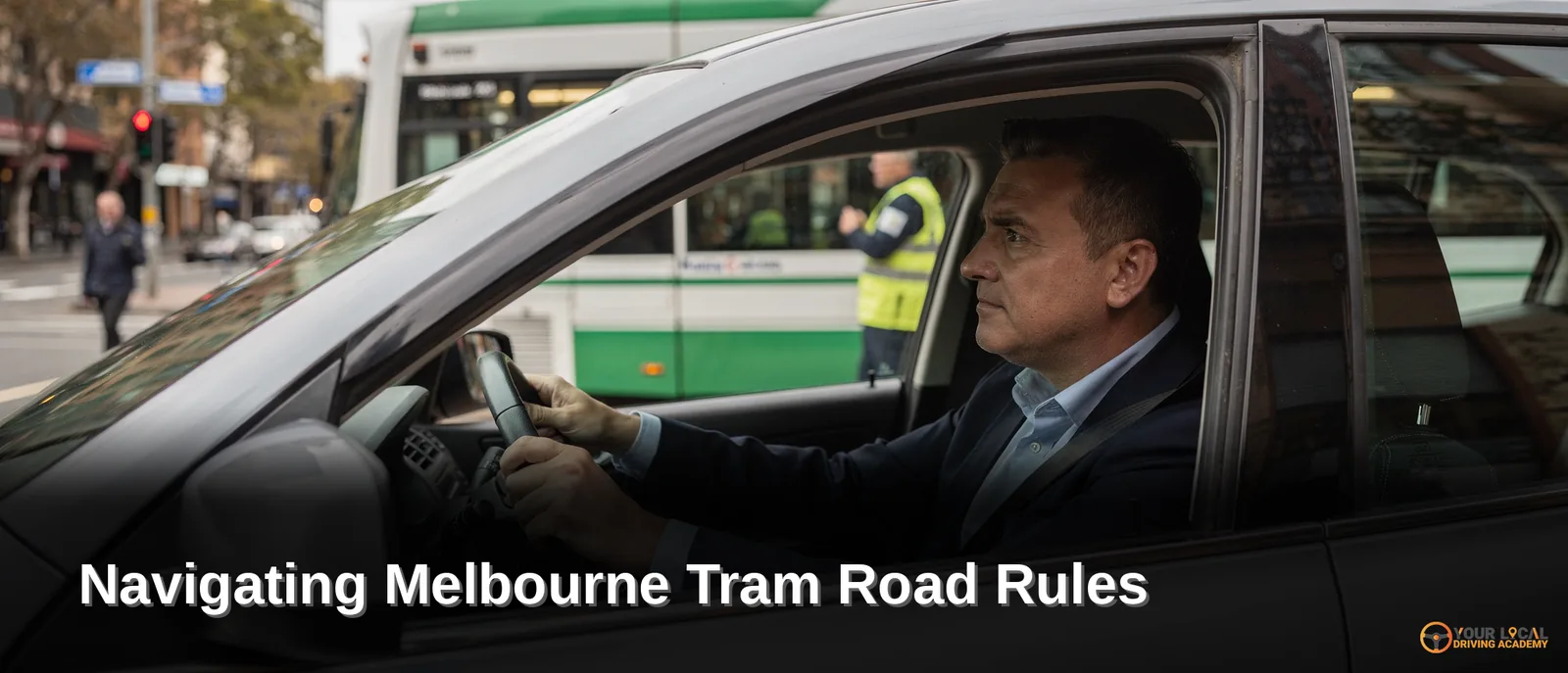
Melbourne road rules require drivers to stay clear of tram tracks unless overtaking is unsafe, give way to passengers boarding or alighting, and perform hook turns at marked intersections. Victoria’s tram network spans 250 kilometers with over 500 trams. 2,632 roadside near-misses occurred in 2021, underscoring why Your Local Driving Academy trains Melbourne learners on these exact hazards before test day.
Key Takeaways
- Victoria operates a tram network spanning 250 kilometres with over 500 trams.
- Drivers must not overtake trams on the left side under any circumstances in Melbourne.
- Hook turns apply at intersections where trams operate on the same road as vehicles.
- Your Local Driving Academy prepares students for tram-related questions on the VicRoads driving test.
Why Do Melbourne’s Tram Rules Trip Up Drivers?
Confusion stems from scale. Melbourne’s tram system is extensive, stretching roughly 250 kilometers with more than 500 trams sharing the road with everyday traffic. That density creates constant interaction points between cars. Trams across the city, from the CBD grid to outer suburban corridors. Every intersection, every stop, every lane change carries a decision point that many drivers never fully learn.
The consequences show up in the numbers. The Department of Transport recorded 2,632 roadside incidents or near-misses involving trams in 2021 alone. That figure represents real risk on real streets, not an abstract statistic. Trams have operated as a historic, integral part of Melbourne’s transport network for generations. Many drivers still misunderstand how cars are permitted to navigate around them.
What Tram Rules Do Drivers Get Wrong Most Often?
Five commonly misunderstood rules account for the bulk of driver confusion around Melbourne tram road rules. These errors span turning behavior, stopping distances, and passenger right-of-way. They surface repeatedly in both learner testing and everyday commuting.
- Overtaking a stationary tram without checking for boarding or alighting passengers
- Failing to stop behind tram doors when passengers are crossing
- Misjudging hook turn requirements at tram-heavy intersections
- Merging into tram lanes without full awareness of tram right-of-way
- Misreading signage that restricts vehicle movement near tram tracks
Why Does This Matter for New Drivers?
Unfamiliarity carries measurable cost. A candidate who cannot demonstrate tram awareness during the VicRoads drive test risks failure on a rule most textbooks treat as secondary. Structured, one-to-one instruction addresses these gaps directly, building the hazard recognition that written study alone rarely delivers.
How Do You Safely Pass a Stopped Tram?
Drivers pass a stopped tram by waiting behind it until passengers finish boarding or alighting, then proceeding only once the tram doors close and the roadway clears. Stationary trams create one of the highest-risk moments on Melbourne roads. Pedestrians step directly into traffic lanes to reach the tram or the curb. The Department of Transport recorded 2,632 roadside incidents or near-misses involving trams across Victoria in 2021, a figure that underscores how easily this maneuver goes wrong. That data drove the launch of the Tram Stops You Stop campaign, which asks drivers to watch for pedestrians and treat every stopped tram as a signal to slow down and look twice.
Melbourne’s tram road rules sit alongside the foundational requirement to drive on the left side of the road. Lane discipline near tracks matters just as much as timing. Misjudging when it’s safe to pass a tram ranks among the five most commonly misunderstood road rules for Melbourne drivers, according to reporting on tram safety.
What Should Drivers Do When a Tram Stops Ahead?
Drivers should come to a complete stop behind the rear doors of the tram once it halts at a designated stop. Passengers may cross in front of or behind the tram. Movement resumes only when the doors shut and the path is clear. Treating this pause as mandatory, not optional, protects pedestrians who often misjudge oncoming traffic.
Is It Ever Legal to Pass a Stopped Tram?
Passing becomes legal in specific configurations, such as a marked safety zone or a designated passing lane. Signage permits controlled movement at reduced speed. Absent that signage, drivers wait. Learner drivers preparing for the VicRoads test should confirm this signage recognition well before test day. Instructors at Your Local Driving Academy build this scenario into structured lesson plans across Melbourne.
What Is a Hook Turn and When Is It Required?
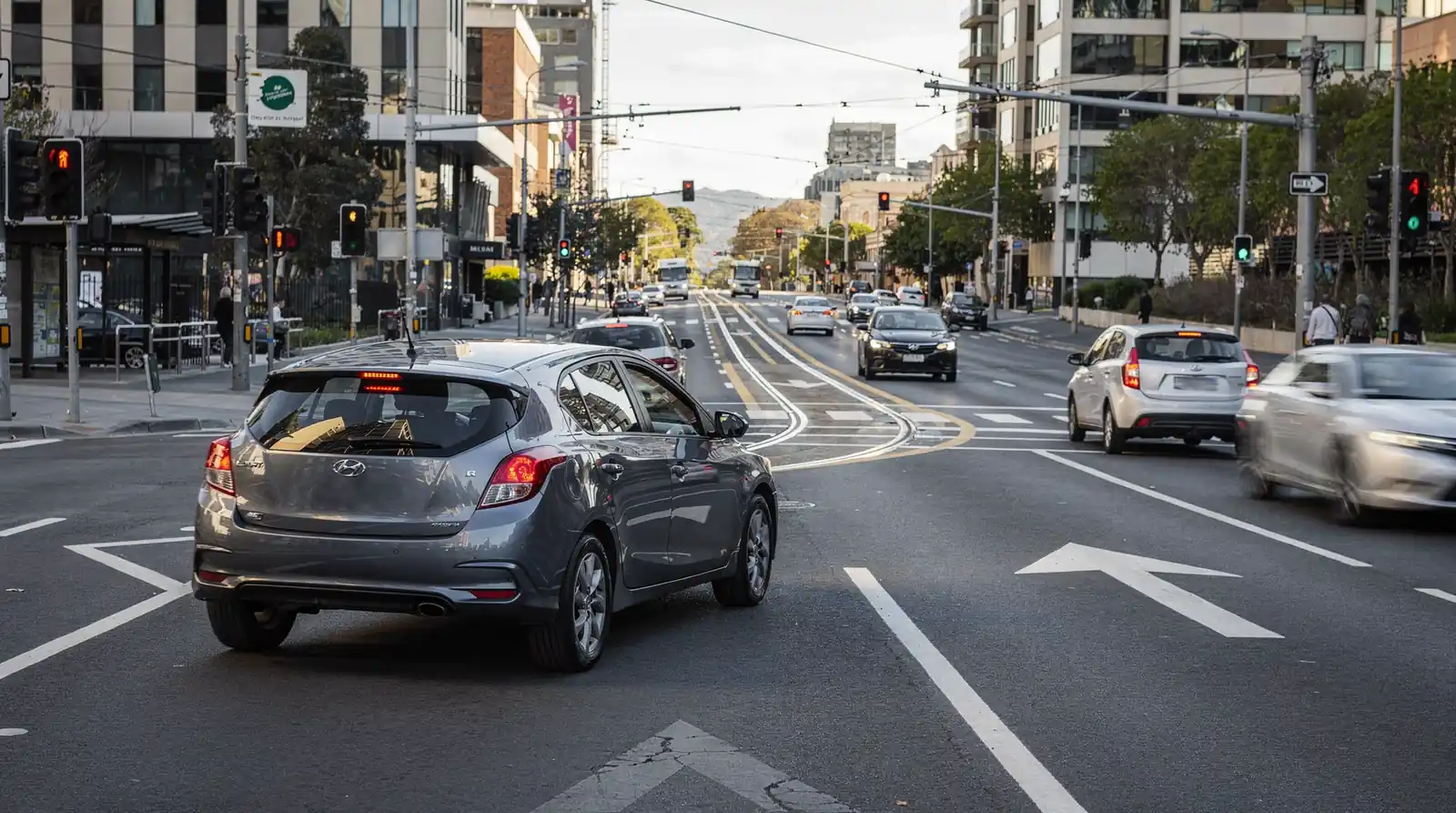
A hook turn is a right-turn maneuver performed from the left lane rather than the right, required at specific Melbourne intersections where trams operate. This layout keeps cars clear of tram tracks running down the center of the road, preventing gridlock at busy junctions. Melbourne’s tram network shapes much of the city’s road design. Few road rules confuse newer drivers more than this one.
Driving in Melbourne carries its own set of demands. Few pair together as often as melbourne tram road rules and hook turn procedure. Both require drivers to think differently than they would on a standard suburban road. A driver who defaults to habits learned elsewhere risks a wrong turn, a blocked tram, or a missed test outcome.
Why does Melbourne use hook turns instead of normal right turns?
Standard right turns from the center or right lane would force cars to stop across tram tracks, blocking trams and disrupting the flow of the network. Hook turns solve this by keeping the right lane clear for tram movement. Drivers instead wait in the left lane, positioned parallel to the crossing traffic, until the light changes and the path ahead is clear.
Where do learner drivers need to watch for hook turns?
Hook turns appear only at signed intersections, typically marked with a black-and-white sign showing a hooked arrow. Not every tram-affected intersection requires one, so drivers must check signage rather than assume.
For anyone preparing for a VicRoads driving test, mastering this maneuver alongside broader tram rules is essential groundwork. Test routes through the metropolitan area frequently include tram-affected intersections, and examiners expect confident, correct execution rather than hesitation.

Which General Road Rules Apply Near Tram Tracks?
General road rules near tram tracks combine standard speed, phone, and alcohol limits with the added complexity of shared lanes. Melbourne’s built-up streets, where most tram routes run, carry a default speed limit of 50 km/h. That limit shapes how much time a driver has to react when a tram stops ahead to load or unload passengers. Fast approaches leave little margin for error in these zones.
Distraction compounds the risk. Using a hand-held mobile phone while driving remains illegal across Victoria. Enforcement matters most where lane markings, hook-turn arrows, and tram signals demand full attention. A learner navigating a tram-heavy intersection cannot afford a glance at a screen.
Alcohol limits add another layer specific to this audience. Learner and probationary drivers must maintain a zero blood alcohol concentration, a rule that applies directly to P-platers and learners still building confidence around melbourne tram road rules. Fully licensed drivers face a 0.05 percent limit. The margin for misjudging a tram stop or hook turn shrinks well before that limit gets tested.
Does the speed limit change near a stopped tram? The posted limit itself does not change. Drivers must still slow down and stop behind a stationary tram unless a safety zone separates traffic from boarding passengers. Reaction time at 50 km/h is far tighter than most learners expect.
Why does phone use matter more around trams? Tram intersections require split-second decisions on lane position and right-of-way. A hand-held device diverts attention exactly when hook-turn signals and pedestrian movement demand full focus.
Quick reference for shared-road compliance:
- Speed limit: 50 km/h in built-up, tram-served streets
- Phones: hand-held use illegal while driving
- Learners/P-platers: zero BAC
- Full license holders: 0.05% BAC limit
How Can Structured Lessons Build Tram Confidence?
Structured lesson programs build tram confidence by breaking a complex skill into repeatable steps: observation, positioning, timing, and response. Melbourne’s tram corridors demand constant hazard scanning, something learners rarely master through casual practice alone. A formal curriculum delivered across Melbourne gives learners repeated exposure to tram stops, hook turns, and mixed-traffic intersections until the correct response becomes automatic rather than guesswork.
Comprehensive driving lesson programs available throughout Melbourne focus specifically on the hazard awareness that tram-heavy streets require. Learners practice identifying tram signals, judging safe following distances, and recognizing when a stopped tram legally requires other vehicles to halt. Progression matters here. Skills build session by session rather than being crammed before test day.
Why Does Instructor Qualification Matter for Tram-Specific Rules?
Instructor credentials determine how accurately Melbourne tram road rules get taught. Anyone evaluating a driving school should confirm instructors hold a Certificate IV in Transport. Logistics, specializing in road transport and car driving instruction. This qualification ensures guidance on tram interactions and hook turn procedures meets a verified professional standard, not informal habit.
Does Structured Preparation Actually Improve Test Outcomes?
Evidence points to yes. A reported a notable share first-time pass rate reflects what happens when learners rehearse test-route scenarios, including tram crossings and hook turns, before facing the VicRoads examiner. Repetition under realistic conditions reduces hesitation at the exact moments examiners watch most closely.
Your Local Driving Academy, based in Hallam, Victoria, extends this structured, one-to-one approach to learners across the Melbourne metropolitan area. Consistent brand identity and professional recognition support learners who need reliable, standardized instruction regardless of which Melbourne suburb they call home.
FAQ
Can you overtake a tram on the left in Melbourne?
No. Melbourne road rules prohibit overtaking trams on the left side under any circumstances. This maneuver puts drivers in direct conflict with boarding or alighting passengers.
When do drivers need to perform a hook turn?
Hook turns apply at marked intersections where trams share the road with vehicles. Your Local Driving Academy trains Melbourne learners on this exact requirement before their VicRoads test.
What should drivers do when a tram stops to load passengers?
Wait behind the tram until passengers finish boarding or alighting, then proceed only after the doors close and the roadway clears of pedestrians.
Conclusion
In closing, mastering tram safety represents a fundamental component of responsible driving in Melbourne. By understanding right-of-way rules, maintaining appropriate distances, and recognizing tram-specific hazards, learner drivers develop the situational awareness necessary to navigate shared road environments confidently. Structured driver education that emphasizes these critical skills builds the foundation for safe, compliant driving practices that protect all road users and contribute to Melbourne’s overall traffic safety.