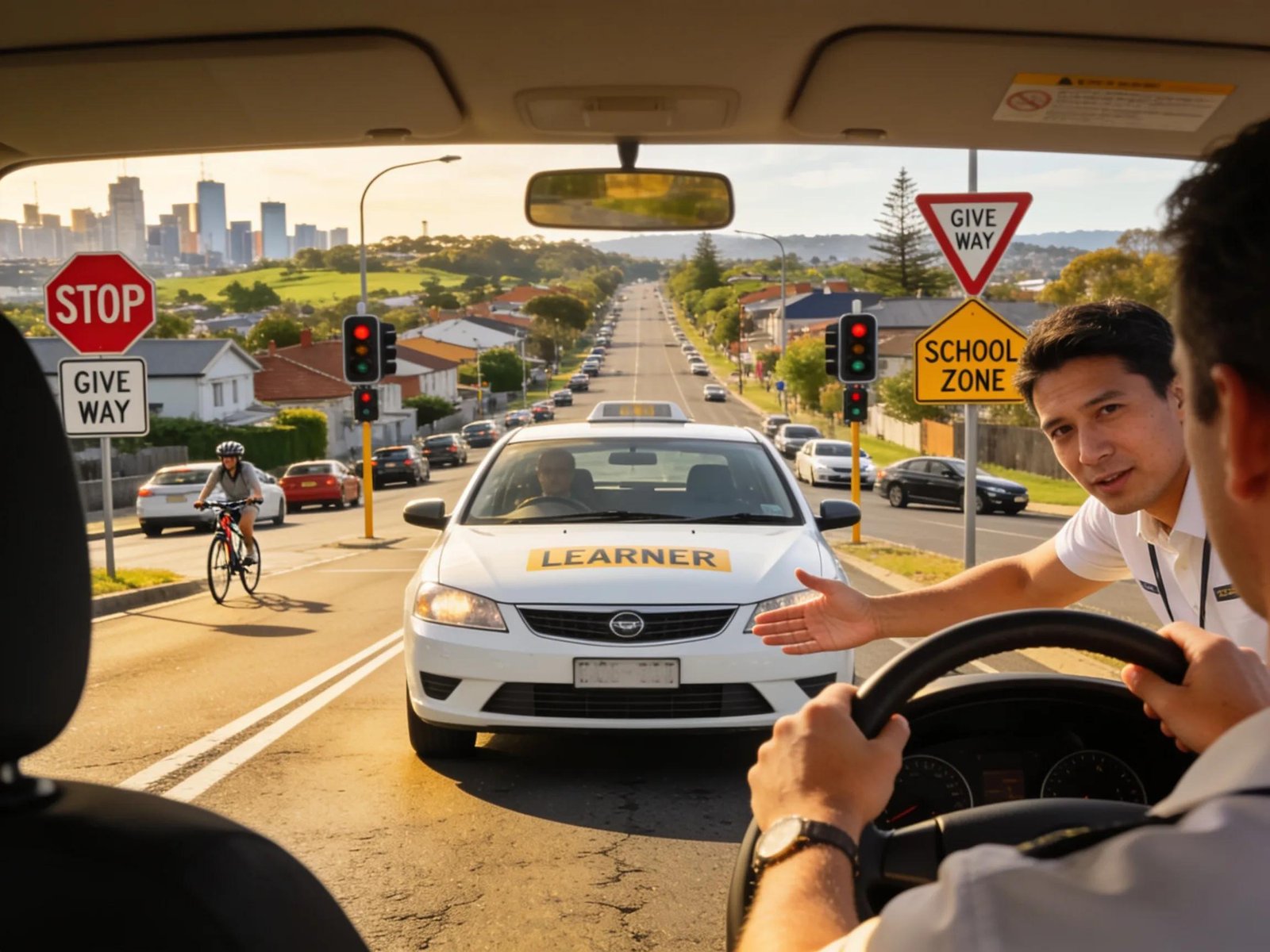
By Eiad Chisty, Your Local Driving Academy
Preparing for your VicRoads driving test can feel overwhelming, but understanding common driving test mistakes, knowing the scoring rubric, and applying proven techniques can set you up for success. This guide breaks down the key errors to avoid — including immediate fail errors — and delivers essential VicRoads driving test tips to help you pass the VicRoads test first time. Learn how to sharpen your skills with practical strategies, including mock drive tests with Your Local Driving Academy.
The VicRoads Drive Test Scoring Rubric Explained
Your performance in the VicRoads driving test is measured against specific criteria divided into three main error categories: Immediate Termination Errors, Critical Driving Errors, and Maneuver Mistakes. Understanding these is fundamental to your preparation:
Top Common Driving Test Mistakes to Avoid
Many learner drivers fail their VicRoads driving test due to avoidable errors. Here are the most frequent pitfalls and how to overcome them:
- Incomplete Stops at STOP Signs: Always come to a full and complete stop, checking all directions before proceeding.
- Speeding in Restricted Zones: Strictly adhere to speed limits, especially in 40 km/h school and roadwork zones—exceeding even by 1 km/h risks failure.
- Neglecting Blind-Spot Checks: Before changing lanes, pulling away from the kerb, or turning across bike lanes, perform thorough over-the-shoulder head checks.
- Failing to Give Way at Roundabouts: Understand right-of-way rules and yield appropriately.
- Insufficient Mirror Scanning: Check mirrors regularly, ideally every 8-10 seconds, to maintain awareness of traffic.
- Incorrect Signaling: Signal at least 3 seconds before moving; failure to signal or signaling too late causes point deductions.
- Poor Maneuver Execution: Avoid kerb contact during parking or 3-point turns, and minimize dry steering to show smooth vehicle control.
- Unsafe Vehicle Positioning: Maintain safe distances and proper lane discipline to prevent tester intervention.
- Nervousness and Anxiety: Stay calm to avoid overlooking critical checks or making sudden mistakes.
- Lack of Preparation: Practicing real-drive mock tests will improve both skills and confidence before the exam.
How to Pass Your VicRoads Test First Time with Effective Strategies
Passing the VicRoads driving test on your first attempt requires focused practice and strategic preparation. Follow these expert VicRoads driving test tips:
- Enroll in Professional Driving Lessons: Take lessons with experienced instructors who understand the VicRoads test requirements.
- Participate in Mock Drive Tests: Your Local Driving Academy offers realistic mock tests simulating the exam environment. Call +61455889588 to book a session that helps identify and eliminate errors before test day.
- Practice Key Maneuvers Regularly: Reverse parallel parking, 3-point turns, and controlled stops must be perfected without kerb strikes or hesitations.
- Master Observation Techniques: Make mirror checks and blind-spot head checks routine and timely.
- Understand Road Rules Thoroughly: Study the current VicRoads driver handbook and test checklist to avoid unexpected errors.
- Practice Test Discipline: Follow all legal requirements such as complete stops, signaling, and speed adherence precisely.
- Manage Test Anxiety: Techniques like deep breathing, visualization, and positive affirmations can improve focus.
Frequently Asked Questions About the VicRoads Driving Test
What constitutes an immediate fail during the VicRoads test?
Immediate fail errors include failing to stop completely at stop signs, exceeding speed limits (even by 1-2 km/h in sensitive zones), causing the test examiner to intervene, and dangerous positioning of the vehicle that compromises safety.
How often should I check my mirrors during the test?
You should perform mirror scans every 8 to 10 seconds to maintain a constant awareness of your surroundings and avoid critical errors.
What is the best way to prepare for blind-spot checks?
Practice the habit of looking over your shoulder to check the blind spots before lane changes, pulling away from the curb, or crossing bike lanes. Consistent practice during lessons and mock tests will make these checks automatic.
How can mock drive tests help me pass first time?
Mock drive tests replicate the official VicRoads testing conditions, allowing you to experience the pressure and receive feedback on your errors. This helps you identify weaknesses and build confidence, significantly improving your chances of passing the VicRoads test first time.
Who can I contact for professional driving lessons and mock tests in Melbourne?
Your Local Driving Academy offers tailored driving lessons and mock tests designed to eliminate immediate fail errors and other common mistakes. Call +61455889588 today to schedule sessions and get expert guidance.
Conclusion
Successfully passing the VicRoads driving test the first time requires attention to detail, rigorous practice, and awareness of scoring criteria. By avoiding common driving test mistakes, focusing on eliminating immediate fail errors, and leveraging professional lessons and mock tests, you can approach your test with confidence and skill. Contact Your Local Driving Academy at +61455889588 to kickstart your journey toward driving success.