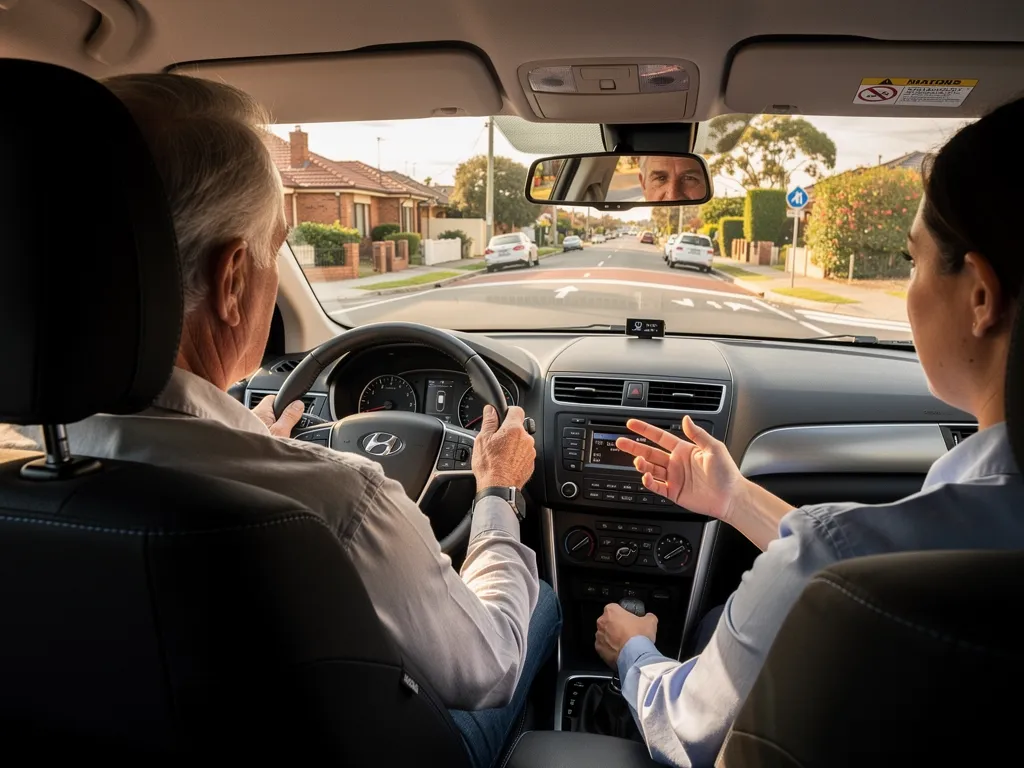
Senior driver refresher lessons in Melbourne, offered by Your Local Driving Academy, rebuild confidence through patient, one-to-one instruction with accredited male and female instructors. Sessions in dual-control vehicles address updated road rules, hazard awareness, and skill gaps, helping mature drivers aged 65+ retain independence safely on Melbourne roads. transitioning from driving seniors
Key Takeaways
- Senior refresher lessons restore driving confidence through practical, judgment-free practice on familiar roads.
- Your Local Driving Academy’s 12-person team provides structured lessons designed for older drivers’ individual paces.
- Updated driving knowledge and safety techniques help seniors maintain independence and road competence.
- Refresher lessons address specific concerns after extended breaks from driving with personalized instruction.

What Are Senior Driver Refresher Lessons?
Structured programs define senior driver refresher lessons: sessions built specifically to help older Melbourne drivers maintain independence and confidence behind the wheel. Skills fade with time away from regular driving, and busy arterial roads change faster than memory does. A structured refresher closes that gap through updated road knowledge. Practical, hands-on tips that support both safety and competence during real driving conditions across metropolitan Melbourne.
For families researching a driving lessons for seniors melbourne option, the goal is rarely about passing a test. It centers on restoring comfort with roundabouts, freeway merges, and multi-lane intersections common throughout the city and its suburbs. An elderly driver refresher course typically works through these scenarios gradually, matching pace to the driver’s own comfort level rather than a fixed curriculum.
How does an assessment fit into this process?
A senior driving assessment victoria typically precedes or accompanies refresher lessons, giving instructors a clear picture of current skill levels. This assessment identifies specific areas, such as reaction timing or mirror checks, that benefit from focused practice. Rather than a pass-fail exercise, it functions as a diagnostic tool that shapes the lessons that follow.
What does a typical refresher program include?
Programs vary by provider, but most share common elements:
- Review of current road rules and updated signage
- Practice on familiar local routes to rebuild comfort
- Targeted work on skills like parking, lane changes, and roundabouts
- Personalized pacing rather than a fixed lesson count
Older driver confidence lessons melbourne programs often extend into broader tuition. Structured, personalized instruction supporting logbook hours and overseas license changeovers frequently accommodates refresher training within the same framework, built around each learner’s pace. A driving refresher course south east melbourne families search for typically fits this same model, delivered by a refresher driving instructor melbourne residents can access without relocating their lessons outside familiar suburbs.
Why Do Melbourne Seniors Need Refresher Training?
Independence explains most of the demand. Driving lets older Melburnians travel on their own schedule, run errands, and stay connected to family across the suburbs without depending on others. For many, the daily drive to the shops or a grandchild’s home represents freedom and comfort as much as transportation itself.
Age brings physical and cognitive changes that gradually affect reaction time, vision, and judgment behind the wheel. These shifts don’t happen overnight, but they accumulate, and unaddressed gaps raise the risk of a collision on busy Melbourne roads. Driving lessons for seniors Melbourne residents choose typically target these exact changes, rebuilding skill and awareness before a small lapse becomes a serious incident.
Do older drivers need to relearn road rules?
Road rules change more often than most drivers realize. A Melbourne senior who earned a license decades ago may have missed updates to roundabout etiquette, school zone timing, or right-of-way at complex intersections. An elderly driver refresher course closes that gap by walking through current regulations alongside practical, on-road application.
What does a senior driving assessment actually check?
A senior driving assessment Victoria drivers complete typically reviews reaction time, hazard perception, and confidence handling traffic conditions common across metropolitan Melbourne. The goal isn’t to penalize; it’s to identify where skills have drifted and where targeted practice restores competence.
Consider what’s commonly reassessed during structured refresher sessions:
- Merging and lane changes on multi-lane arterial roads
- Roundabout navigation and give-way judgment
- Reaction time at pedestrian crossings and school zones
- Confidence managing peak-hour traffic density
- Current knowledge of speed zones and signage
Left unaddressed, these gaps compound quietly, chipping away at the independence driving is meant to protect.
How Does Aging Affect Driving Skills?
Aging changes the driving experience gradually, not all at once. Reaction times, visual scanning habits, and comfort with unfamiliar roads can all shift over years of experience behind the wheel. Circumstances change too: a driver who once commuted daily across Melbourne’s inner suburbs may now drive less often, making certain routes or maneuvers feel unfamiliar again.
What a driver needs from a lesson can shift as those circumstances and abilities evolve. The pace of instruction, the style of feedback, and even the local roads used for practice can feel noticeably different from the way they felt decades earlier. A driver navigating a roundabout in Dandenong or merging onto the Monash Freeway may find these tasks require more concentration than they once did, even without any specific medical concern.
Does driving feel different at 70 than it did at 30?
Yes, driving at 70 does not always feel the same as it did at 30. Processing speed, peripheral vision, and confidence in fast-moving traffic can all change with age. This does not mean driving becomes unsafe. It means the skills involved may need periodic attention, much like any other physical routine.
Do older drivers still want to stay on the road?
Most do. Many older drivers continue to enjoy being behind the wheel well into their seventies and beyond. Driving represents freedom, comfort, and independence, particularly for those across greater Melbourne who rely on a car for daily errands, medical appointments, or visits with family.
Common shifts drivers notice with age include:
- Slower adjustment to sudden traffic changes or merging lanes
- Reduced comfort driving at night or in heavy rain
- Hesitation at complex intersections or multi-lane roundabouts
- Preference for familiar routes over unfamiliar ones
None of these changes signal an inability to drive. They signal an opportunity to revisit skills with structured, patient instruction.
What Happens During A Senior Driving Assessment?
A senior driving assessment measures current skills behind the wheel before building a plan to sharpen them. Melbourne instructors evaluate road craft, hazard response, and vehicle control in real traffic conditions found across the metropolitan area, from suburban roundabouts to arterial roads carrying heavier commuter flow. The goal is not to test for failure. It is to identify strengths and pinpoint the areas that need attention.
Booking platforms make this process straightforward. Comparison tools allow families and older drivers to review qualified instructors. Schedule an elderly driver refresher course across different Melbourne suburbs without guesswork. This connects seniors directly with instructors experienced in personalized, assessment-based lessons rather than generic one-size-fits-all training.
What does the assessment actually check?
The session reviews defensive driving habits, awareness of updated Victoria road rules, and reaction to changing traffic patterns. Instructors observe merging, lane changes, and intersection judgment under normal Melbourne traffic conditions. Vehicles used for the assessment carry a 5-star ANCAP safety rating. Feature dual controls, giving instructors a safe way to intervene if needed.
Why does this matter for older drivers specifically?
Skills can shift gradually with age, often without the driver noticing day to day. An assessment-style refresher lesson catches those changes early rather than after an incident occurs. This structured approach supports independence by improving weak points instead of removing driving privileges altogether.
Typical elements covered during a senior driving assessment victoria include:
- Observation and mirror-checking habits at intersections and lane changes
- Response time to unexpected hazards, including pedestrians and cyclists
- Confidence and smoothness when merging onto busier Melbourne roads
- Understanding of current road rules that may have changed since licensing
Each of these areas feeds into a personalized lesson plan, giving older drivers a clear, measurable path toward renewed confidence and continued independence on Melbourne roads.
What Does A Refresher Lesson Include?
A refresher lesson combines paced practice, familiar routes, and structured guidance suited to returning drivers. Sessions build gradually, without pressure or judgment, allowing older drivers across Melbourne to regain comfort behind the wheel at a pace that matches individual confidence levels. Instructors typically start with roads and neighborhoods the learner already knows well, reducing the stress of navigating unfamiliar intersections while relearning core skills.
Returning to the driver’s seat after months or years away often feels genuinely nerve-wracking, even for drivers with decades of prior experience. This reaction is common among mature drivers in Melbourne who stopped driving for reasons ranging from a move overseas to a medical issue or reduced need for a vehicle. Recognizing this, driving lessons for seniors melbourne programs prioritize a calm, judgment-free environment over rigid testing conditions.
Why do older drivers need a different lesson structure?
Older drivers often benefit from a slower introduction to traffic conditions and updated road rules. An elderly driver refresher course typically covers observation habits, reaction timing, and confidence-building exercises rather than pass-or-fail evaluation.
A well-structured session generally includes:
- A relaxed warm-up on quiet, familiar streets
- Gradual exposure to busier Melbourne roads and intersections
- Feedback on positioning, mirror checks, and hazard awareness
- Practical tips tailored to current road conditions
Can refresher lessons be tailored to individual needs?
Flexibility defines this approach. Lessons stay local, adaptable, and customized so each driver returns to the road safely and with genuine confidence. Whether the goal is a senior driving assessment victoria families requested or rebuilding comfort after a long break, the structure adjusts to the driver’s pace rather than a fixed curriculum.
How Do Instructors Build Older Driver Confidence?
Patience shapes every stage of the process. Instructors working with mature learners across Melbourne avoid rushing the pace of a lesson, letting skills settle before introducing new challenges. This deliberate approach separates a suitable driving school for seniors from one built around standard learner timelines.
Experience alone does not prepare an instructor for this work. Supporting older drivers well requires flexibility. A calm, unhurried setting where older driver confidence lessons melbourne can actually take root. A senior returning to city traffic after years off the road needs a different rhythm than a first-time teenage learner. Instructors adjust accordingly, spending extra time on merges, roundabouts, and multi-lane intersections common across Melbourne’s suburban corridors.
What does a typical refresher session focus on?
Sessions usually start with a conversation, not a drive. Instructors ask about specific concerns, whether that means freeway merging near the city or reversing into tighter suburban driveways. From there, the lesson builds gradually, addressing weak points before moving to busier roads.
Why does consistency matter for older learners?
Returning to unfamiliar roads after a break, or adjusting to slower reflexes, feels steadier with the same instructor each session. Support should feel respectful and predictable from the very first meeting, not just the final one. This consistency lets mature learners track their own progress instead of relearning an instructor’s expectations each time.
Structural choices reinforce this steady approach:
- Smaller instructor teams allow closer familiarity with each learner’s pace and history.
- Sessions can be adjusted week to week based on visible progress.
- Feedback stays practical and specific rather than generalized.
A compact team of 12 employees supports this kind of one-to-one attention, giving senior learners across Melbourne consistent instructors rather than rotating staff. That continuity, paired with an unhurried teaching style, is what allows confidence to build steadily instead of all at once.
Standard Or Intensive: Which Pace Fits Seniors?
Pace determines outcomes for mature drivers rebuilding skills after time away from the road. Lesson format shapes how quickly, and how confidently, a driver reaches readiness for Melbourne traffic conditions. For driving lessons for seniors melbourne families are researching, that choice between compressed and gradual formats carries real weight.
Intensive courses concentrate multiple lessons into a short window. This structure speeds up skill acquisition by immersing the learner in focused, repeated practice sessions. Concentrated training suits drivers under time pressure or those who absorb information best in continuous blocks.
Standard lessons follow a different rhythm, spacing sessions across weeks or months. Older drivers and those returning after a long break often benefit from this slower cadence. An elderly driver refresher course delivered gradually allows memory. Muscle habits to settle between sessions, rather than compressing everything into a few intense days.
Is intensive training right for older or returning drivers?
Intensive formats work well for seniors seeking test-ready results on a tight timeline. The immersive structure builds momentum quickly, but it demands sustained concentration over consecutive days. Drivers rebuilding confidence gradually may find the pace demanding rather than reassuring.
How does a standard format support confidence-building?
Standard lessons prioritize steady, incremental progress instead of rapid skill compression. Spacing sessions apart gives seniors time to process feedback and practice independently. This paced approach often aligns better with older driver confidence lessons melbourne programs designed around comfort and gradual mastery.
How Can Families Support A Refresher Course?
Families play a central role in helping older relatives return to the wheel with confidence. Practical support, calm conversation, and realistic expectations matter more than pressure or persuasion. Family members in Melbourne often notice the shift before the driver does: fewer trips to the shops, hesitation at busy intersections, or a general preference for someone else to drive.
Elderly driver refresher courses often begin after a specific trigger. A medical issue frequently prompts a pause from regular driving, and sometimes a car sits unused for months. Whatever the cause, many drivers and their families share the same uncertainty about restarting, and none of them face that uncertainty alone. Recognizing this shared experience helps families approach the topic without shame or urgency.
What should family members do before booking a refresher lesson?
Start with an honest conversation about comfort levels, not a checklist of complaints. Ask which situations feel stressful, such as freeway merging or nighttime driving around Melbourne. Avoid framing the lesson as a test; frame it as a tune-up. This shift in language reduces defensiveness and keeps the older driver open to the process.
Who can families trust to deliver consistent, structured tuition?
An operator with a long-standing presence in Melbourne offers families a dependable option. Based in Hallam, Victoria, Your Local Driving Academy serves learners across greater Melbourne, which makes arranging refresher lessons straightforward for families coordinating schedules from a distance. The academy has guided more than ten thousand drivers toward licensing in Victoria, a track record that gives families a measurable basis for trust rather than a general assurance.
Families can also support the process practically:
- Arranging transport to and from lessons if driving feels stressful beforehand
- Discussing feedback from the instructor together, without judgment
- Encouraging follow-up sessions if confidence builds gradually rather than instantly
FAQ
What is the purpose of senior driver refresher lessons?
These sessions rebuild confidence through patient, one-to-one instruction, helping drivers aged 65+ update road rule knowledge and close skill gaps. The goal is safe, independent driving rather than passing a test.
How does a senior driving assessment work?
The assessment identifies specific areas, such as reaction timing or mirror checks, that need focused practice. It functions as a diagnostic tool that shapes the refresher lessons that follow, rather than a pass-fail exercise.
What does a typical refresher program cover?
Programs include reviewing current road rules and signage, practicing on familiar local routes, and targeting skills like parking, lane changes, and roundabouts. Instructors personalize the pacing to each driver’s comfort level.
Conclusion
In closing, senior driver refresher lessons represent a structured pathway to sustaining the confidence and independence that safe driving affords. Through tailored instruction focused on contemporary road conditions, hazard recognition, and vehicle handling, mature-age drivers strengthen their capabilities and extend their mobility with assurance. This commitment to ongoing skill development reflects a fundamental principle: driving competence is not static, and periodic professional assessment ensures that independence remains both achievable and secure for years to come.