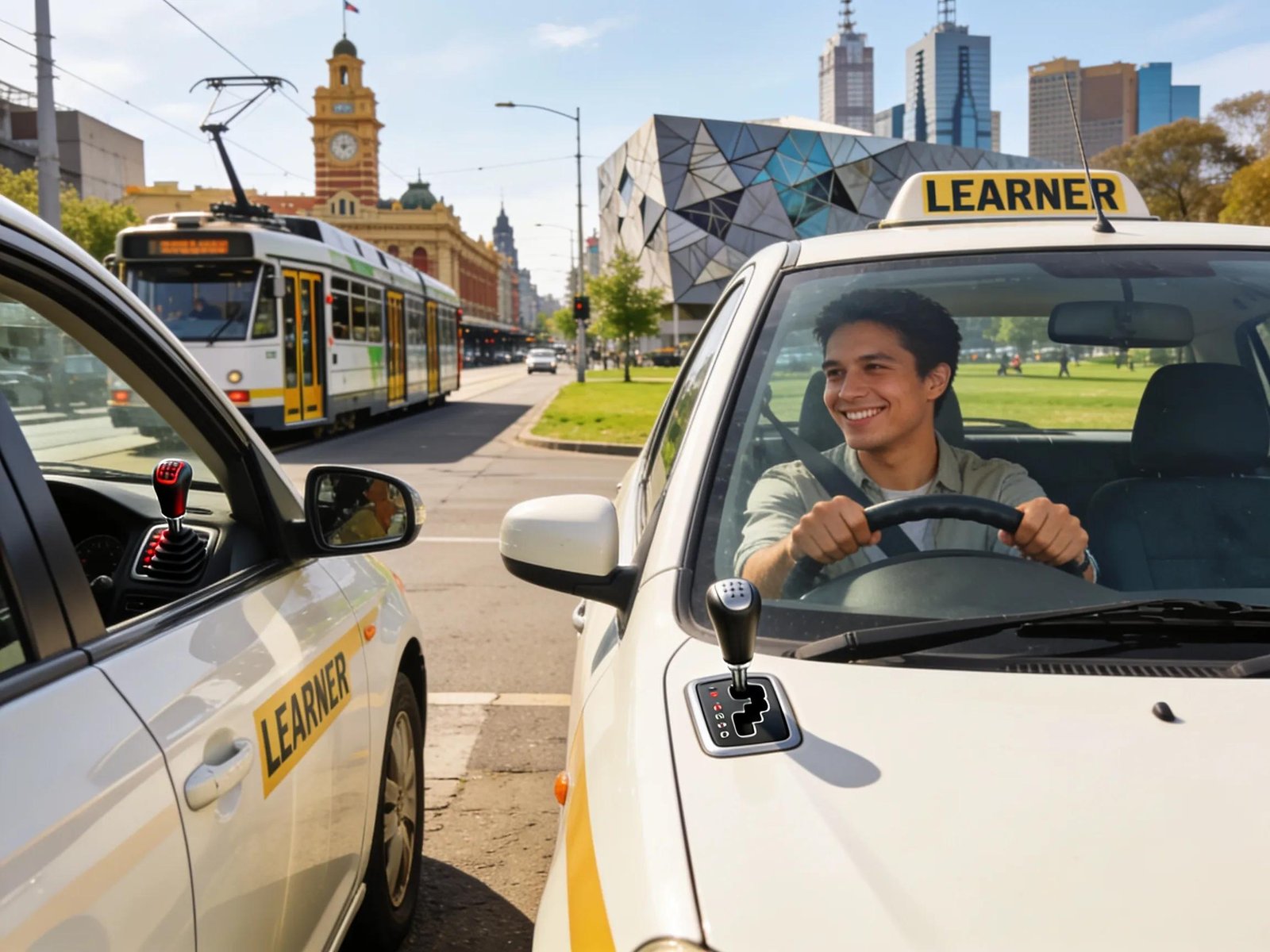
Manual vs Automatic Driving Lessons in Melbourne: Which Should You Choose for Optimal Learner Driver Success?
By Eiad Chisty, Your Local Driving Academy
Choosing between manual and automatic driving lessons in Melbourne can significantly influence a learner driver’s journey. This guide examines the essential differences, benefits, and costs associated with both types of lessons, providing insights into which option may be better suited for different learners. Effective driving instruction facilitates a competent driving experience; thus, understanding the features of manual versus automatic lessons is crucial. Many learners face the challenge of selecting the most suitable transmission type based on comfort, ease of learning, and financial implications. This article outlines core distinctions, highlights mechanics of manual and automatic transmissions, evaluates costs, and presents comprehensive findings on learner driver success rates in Melbourne.
Manual Driving Lessons
Manual driving lessons involve teaching learners to operate vehicles with a manual transmission, which requires the use of a clutch and gear stick for changing gears. This type of instruction is often perceived as demanding due to the necessity of mastering clutch control and gear shifting. However, learners who complete manual lessons often develop a deeper understanding of vehicle mechanics, which can enhance overall safety and control. A manual car also provides a sense of mastery and independence, with drivers able to operate a wider range of vehicles compared to driving only automatics.
Moreover, manual driving lessons typically entail slightly higher costs due to the complexities involved in the training. Nevertheless, some students appreciate the challenge and find that manual lessons prepare them for more diverse driving situations in the long run. Consequently, it’s essential for learners to assess their personal preferences and long-term goals when considering manual driving lessons.
What Are the Key Differences Between Manual and Automatic Driving Lessons in Melbourne?

The fundamental differences between manual and automatic driving lessons lie in the mechanisms at play. In manual vehicles, the driver must manage gear changes and clutch operation, fostering skills that contribute to “better vehicle control”. In contrast, automatic vehicles streamline this process by managing gear changes for the driver, allowing them to focus solely on steering and road awareness. This reduction in complexity often makes automatic lessons more appealing to novice drivers who prioritize ease of learning.
How Do Manual and Automatic Transmissions Function Differently?
Manual transmissions rely on the driver’s ability to shift gears manually, providing full control of the car’s performance. This involves pressing the clutch pedal to disengage the engine from the wheels, allowing the driver to change gears using the gear stick. On the other hand, automatic transmissions use a system of hydraulic controls to change gears automatically, making them simpler to operate. This fundamental difference affects how learners engage with the vehicle and impacts their overall driving experience.
Automatic Driving Lessons
Automatic driving lessons focus on teaching drivers to operate vehicles with automatic transmissions. These lessons are generally perceived as easier to learn and are often recommended for those new to driving. The absence of a clutch pedal simplifies the learning process, allowing learners to devote their attention to essential driving skills such as road awareness and safety.
While automatic lessons are often perceived as less challenging, they come with their own set of benefits. Automatic cars can offer a more relaxed driving experience, especially in stop-and-go traffic, where manual control can become cumbersome. As a result, many learners find that automatic lessons build confidence and quick skill acquisition.
What Are the Primary Benefits and Challenges of Each Transmission Type?
Automatic vehicles present several critical advantages, such as ease of use and reduced learning curves. Learners often find they can achieve test readiness faster with automatic instruction. However, the primary challenge remains that automatic drivers may lack the mechanical insight that accompanies manual driving instruction, potentially limiting their ability to handle manual vehicles in the future.
Conversely, while manual driving can be complex, the skills gained provide a more holistic understanding of vehicle control and engagement with driving mechanics. Thus, opting for automatic or manual lessons ultimately hinges on personal aptitude and specific goals in the driving journey.
How Do Melbourne Driving Test Requirements Differ for Manual vs Automatic Learners?
In Melbourne, the driving test requirements vary based on the transmission type chosen by the learner. For those taking lessons in a manual vehicle, the driving test will necessitate the demonstration of key skills, including gear changes under various driving conditions. This ensures that the learner is proficient in using a manual transmission. Conversely, automatic learners are tested on their ability to safely operate an automatic vehicle without the same emphasis on gear shifting.
Learners should consider these requirements when deciding which driving lessons to pursue, as passing the driving test is contingent on demonstrating proficiency in the selected transmission type.
Cost Comparison

When evaluating driving lessons in Melbourne, cost is a significant factor. Typically, manual driving lessons range from $70 to $130 per hour, depending on the driving school and instructor qualifications. In comparison, automatic driving lessons generally cost between $60 and $120 per hour. While prices vary, the cost difference can influence a learner’s choice, especially if budget considerations are paramount.
The potential for increased lesson duration in manual driving—as learners often require more time to develop their skills—should also be taken into account when considering long-term expenses related to driving instruction. Overall, an informed approach to pricing will help learners choose the driving lesson format that fits their financial capabilities while meeting their learning needs.
What Are the Comparative Costs and Packages for Manual and Automatic Driving Lessons in Melbourne?
Many driving schools in Melbourne offer various packages for both manual and automatic lessons. These packages may include discounted rates for block bookings, which can further influence the decision-making process for learners. By comparing the offerings of different driving schools, learners can determine the options that provide the best value for their needs. For comparison, many also offer specialized “corporate client needs”.
How Do Lesson Duration, Cost, and Difficulty Levels Differ by Transmission Type?
The duration, cost, and difficulty levels associated with manual and automatic driving lessons can vary significantly. On average:
- Lesson Duration: Manual lessons often require longer sessions due to the intricate skills involved, while automatic lessons may offer quicker progression.
- Cost Variance: Generally, lessons for manual transmission tend to be priced higher due to the complexity of skills being taught.
- Difficulty Levels: Manual driving lessons present a steeper learning curve compared to automatic lessons, which typically allow for faster competency.
These factors are essential for learners when selecting an appropriate driving course that aligns with their aspirations and schedules.
How Does Your Local Driving Academy Tailor Driving Lessons for NDIS Participants and Corporate Clients?
Your Local Driving Academy understands the diverse needs of learners, including NDIS participants and corporate clients seeking specialized instruction. The academy implements tailored driving programs designed to ensure accessibility and effective learning for all students. For learners requiring specific support, the academy provides “personalized support”.
What Accessibility Features and Personalized Support Are Offered for NDIS Learners?
For NDIS learners, personalized support is critical. Your Local Driving Academy offers modified vehicles equipped with accessibility adaptations, ensuring that all students can participate fully in driving lessons. This attention to specialized needs guarantees that every learner feels comfortable and secure while on the road.
Which Custom Training Options Address Corporate Client Needs?
Corporate clients seeking driving lessons benefit from customized training packages that reflect their specific operational requirements. These training options can provide targeted instruction designed to enhance employee competencies behind the wheel, including fleet management or safe driving practices.
What Are the Documented Benefits and Reviews of Manual vs Automatic Driving Lessons from Learner Drivers in Melbourne?
Learner drivers often share their experiences and feedback on the effectiveness of both manually-operated and automatic lessons. Reviews indicate that while manual lessons foster a deeper understanding and adaptability in driving, many learners appreciate the intuitive ease of automatic driving lessons, especially in initial stages.
How Do Learner Driver Experiences Differ Between Manual and Automatic Lessons?
Experiences with manual versus automatic lessons vary widely among learners. Some report feeling more accomplished having mastered manual driving, while others emphasize the convenience of automatic lessons in achieving quick readiness for driving tests.
What Safety and Vehicle Control Advantages Are Reported for Each Transmission Type?
Driving a manual vehicle often translates into heightened safety and control, as drivers are more aware of vehicle mechanics and dynamics. On the other hand, automatic drivers enjoy the ease of driving that minimizes distractions related to gear shifting, resulting in improved focus on the road.
What Frequently Asked Questions Should Learner Drivers Consider When Choosing Between Manual and Automatic Lessons?
Understanding common inquiries can help learner drivers make more informed decisions. Key considerations include the following:
- Which transmission type offers an easier learning curve?
- Are there cost differences affecting long-term driving test success?
- What are the overall benefits of manual versus automatic lessons?
These questions can guide learners toward making choices that align with their unique needs and priorities in their driving education process.
Which Transmission Type Offers an Easier Learning Curve for Melbourne Learners?
Generally, automatic driving lessons are seen as easier for learners due to the minimal complexity involved in operating the vehicle. This factor can lead to quicker test readiness. However, manual lessons encourage comprehensive skill development that may provide advantages in the long run.
Are There Cost Differences Affecting Long-Term Driving Test Success?
Long-term success in driving tests can often correlate with the type of lessons taken. While automatic lessons may provide faster initial success, the comprehensive skill-building from manual driving lessons may result in better preparation for diverse driving scenarios, which ultimately fosters lasting competency.