Master Learner Driver Test Preparation: Expert Tips for Success with Learner Permit Test Strategies
By Eiad Chisty, Your Local Driving Academy
Preparing for the learner driver test can be a daunting experience for many aspiring drivers. Mastering this crucial step involves understanding the road rules and practical driving skills required to pass the test effectively. This guide aims to provide valuable tips, strategies, and a detailed breakdown of the learner permit application process, helping to alleviate the anxiety surrounding the assessment. Learner drivers often struggle with specific requirements and preparation techniques, so knowing the right approach is essential. This article will cover effective preparation strategies, methods for navigating the application process, common pitfalls to avoid, and expert tips for ensuring success. Additionally, we will explore essential steps in the learner permit application process specific to NSW.
Effective Preparation Strategies
To effectively prepare for the learner driver test, it is vital to adopt a comprehensive approach that combines practical lessons with theoretical knowledge. The following strategies can significantly enhance overall readiness:
- Enroll in Professional Lessons: Taking structured lessons from a qualified instructor provides learners with expert guidance and tailored feedback to improve driving skills thoroughly.
- Accumulate Driving Experience: Practicing driving in various conditions, such as day and night or different weather scenarios, helps build confidence and skills.
- Understand Test Requirements: Familiarizing yourself with the specific requirements of the learner driver test, including road rules and practical tasks, will prepare you for what to expect.
Implementing these strategies will ensure a structured and thorough preparation process for the test. Next, understanding how to navigate the learner permit application process is crucial for a smooth experience.
Methods for Navigating the Application Process
Applying for a learner permit can be straightforward when you are aware of the necessary steps involved. The following methods outline the essential tasks needed to prepare for the application process and help you avoid setbacks:
- Ensure Necessary Documents Are Prepared: Collect all required documents ahead of time, including proof of identity and residency.
- Schedule Lessons Flexibly: For NDIS participants, ensure that your driving lesson bookings accommodate personal needs and preferences.
The thorough preparation of documentation and appropriate lesson scheduling leads to a seamless application journey. It’s vital to know how to meet the NSW eligibility criteria for the learner permit.
How to Meet NSW Eligibility Criteria for the Learner Permit?
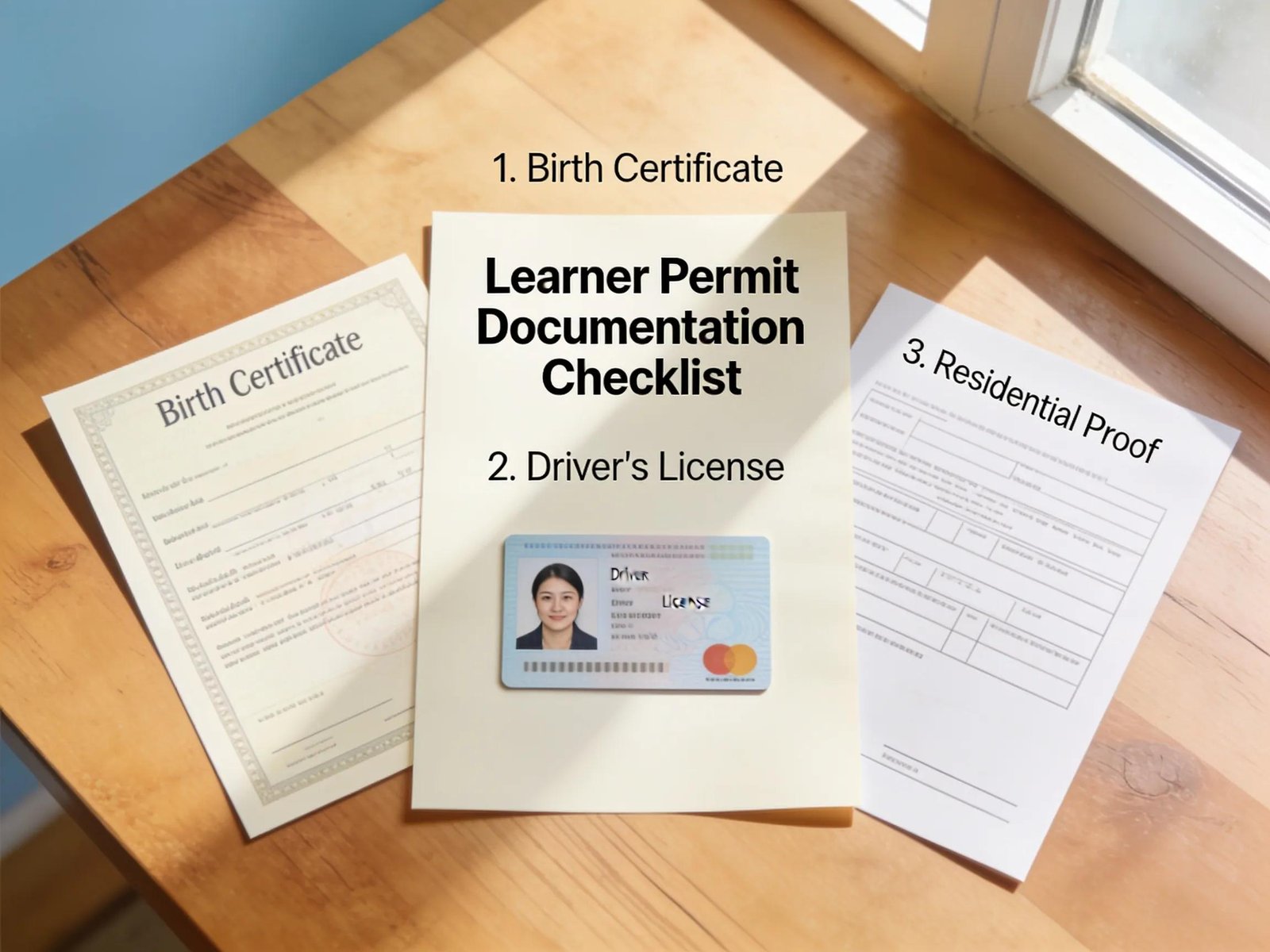
Meeting the eligibility criteria for the learner permit in NSW is essential and involves fulfilling certain conditions:
- Age Requirement: Applicants must be at least 16 years old to be eligible to apply.
- Identity Verification: Learners need to present acceptable proof of identity, such as a birth certificate or passport.
- Knowledge Test: Successfully completing the road rules knowledge test is mandatory.
Comprehending these criteria is vital in ensuring that you can successfully obtain your learner permit and proceed with your driving education.
Which Documents Are Required for Learner Driver Test Registration?
When registering for the learner driver test, having all necessary documents ready will facilitate the process. Key documents include:
- Your NSW learner permit: Essential for identification.
- Proof of identity: Such as a birth certificate, driver’s license, or passport.
- Residential proof: Documents that can verify your current address.
Having the right documents prepared can greatly expedite the registration process and help you remain focused on driving preparation.
Common Pitfalls to Avoid
As a learner driver, there are common mistakes that should be avoided to enhance the chances of passing the driving test. Some of these pitfalls include:
- Poor Observation Practices: Failing to check mirrors and blind spots adequately can lead to dangerous situations during the test.
- Not Coming to Complete Stops: Rolling stops at stop signs or traffic signals is a critical error that examiners observe closely.
- Speed Control Issues: Maintaining appropriate speeds, especially in varying conditions, is essential for ensuring safety.
By avoiding these common pitfalls, learner drivers can improve their preparedness and boost their confidence before taking the test.
Additional Tips for Success

To further bolster your chances of success on the learner driver test, consider the following expert tips:
- Conduct Mock Tests: Simulating the actual driving test conditions can help you build comfort and identify areas for improvement.
- Use Relaxation Techniques: Before your test, employ relaxation strategies to manage anxiety and stay focused.
- Arrive Early on Test Day: Giving yourself extra time to settle in before the test can alleviate potential distractions and reduce stress.
These strategies not only help in testing situations but ultimately contribute to safer driving practices.
What Are the Essential Steps in the Learner Permit Application Process in NSW?
The learner permit application process can be simplified by following essential steps laid out by the NSW Roads and Maritime Services. Below are the crucial steps involved:
- Complete the Online Application: Fill out your application via the Service NSW website.
- Pay the Application Fee: Be prepared to pay the necessary fees associated with the application.
- Schedule Your Knowledge Test: Arrange a time that works for you to take the knowledge test at your local Service NSW center.
By following these steps, learner drivers can navigate the application process more efficiently.
How to Meet NSW Eligibility Criteria for the Learner Permit?
As mentioned earlier, meeting the eligibility criteria for the learner permit includes being at least 16 years of age, providing proof of identity, and passing the knowledge test. Ensuring these foundations are met is critical for a successful application.
Which Documents Are Required for Learner Driver Test Registration?
The required documentation involves providing your learner permit, proof of identity, and residential proof. Having these documents ready not only streamlines the process but also prevents last-minute issues.
How to Effectively Prepare for the NSW Road Rules Knowledge Test?
Preparing for the NSW road rules knowledge test involves a solid understanding of the intricacies of road rules. This test evaluates your knowledge on the regulations and safe driving practices essential for driving.
What Are the Key NSW Road Rules Covered in the Learner Permit Test?
Key road rules covered in the test include:
- Traffic Signs: Understanding various road signs and their meanings is crucial.
- Traffic Signals: Knowing when to stop or go based on traffic lights.
- Safe Driving Behaviors: Recognizing proper behavior under different driving scenarios is fundamental.
These rules form the basis of safe driving and must be thoroughly understood to succeed on the test.
Which Practice Tests and Resources Enhance Road Rule Mastery?
Utilizing various practice tests and resources can effectively boost your readiness for the road rules knowledge test. Recommended resources include:
- Official Practice Tests: Available through NSW Roads and Maritime Services for authentic practice experience.
- Study Guides: Comprehensive manuals that cover road rules and driving theory.
- Mobile Apps: Interactive tools that allow you to test your knowledge on the go.
By systematically engaging with these resources, you can enhance your understanding and confidence regarding road rules.
What Practical Driving Techniques Are Crucial for Passing the Learner Driver Test?
Understanding practical driving techniques is essential for performing well during the learner driver test. Some crucial skills include:
- Smooth Acceleration and Braking: Controlling your speed through gentle acceleration and consistent braking contributes to a polished driving style.
- Steering Accuracy: Developing precision in steering inputs ensures safety and control during maneuvers.
- Important Maneuvers: Mastery of key driving maneuvers such as parallel parking and lane changes are essential.
These techniques provide the groundwork for successful driving outcomes, both in the test and on the road.
Which Core Driving Skills Should Learners Master Before Testing?
Before taking the learner test, it’s vital to master a set of core driving skills that encompass all aspects of vehicle operation. Key skills include:
- Turning and Merging: Familiarizing oneself with safe turning techniques and merging into traffic.
- Following Distances: Maintaining appropriate space between vehicles based on road conditions.
- Emergency Stop Techniques: Practicing safe methods of stopping the vehicle in emergencies enhances response time and safety.
Mastering these skills contributes to overall driving competence and confidence.
How Can Professional Driving Lessons Improve Test Readiness?
Investing in professional driving lessons significantly boosts a learner’s readiness for the driver test. Key benefits include:
- Structured Learning: Professional instructors provide tailored lessons designed to address specific weaknesses.
- Mock Testing Benefits: They often include mock test scenarios that simulate real exam conditions, which can help alleviate test anxiety.
Professional instruction leads to improved skills and better preparation, equipping learners with the capabilities needed to succeed.
What Support Services Are Available for NDIS Participants Preparing for the Driving Test?
A range of support services is available for NDIS participants looking to prepare for their driving test. These services can provide essential resources to facilitate successful education in driving.
- Personalized Driving Lessons: Customized instructional strategies that cater to individual needs and learning preferences.
- Adaptive Vehicle Modifications: Modifications that make driving accessible for participants with physical disabilities.
Accessing these support services is crucial for NDIS participants and ensures that they receive adequate training tailored to their unique circumstances.
How Does Customized Driving Lesson Instruction Assist NDIS Clients?
Customized driving lessons are particularly beneficial for NDIS clients by offering tailored approaches that consider their unique challenges and requirements. This personalized instruction leads to not only improved skills but also enhances safety and confidence on the road.
What Are the Eligibility and Booking Processes for NDIS Supported Driving Lessons?
Eligibility for NDIS-supported driving lessons typically includes being a registered NDIS participant and having a specific driving goal outlined in the NDIS plan. Booking these lessons involves contacting approved providers and scheduling sessions that align with participants’ individual plans.
How Can Corporate Driving Training Programs Enhance Employee Road Safety?
Corporate driving training programs aim to enhance employee road safety by educating them on best practices and defensive driving techniques. Key considerations of such programs include:
- Defensive Driving Courses: Training that focuses on hazard identification and the prevention of road accidents.
- Risk Management Workshops: These workshops discuss strategies for reducing workplace-related driving incidents.
Implementing these programs can significantly improve employee safety and reduce liability for organizations.
What Are the Key Components of Corporate Driving Programs?
Key components of effective corporate driving programs include:
- Customized Training Packages: Programs tailored to address specific risks and driving environments pertinent to the organization.
- On-Road Assessments: Evaluating employees’ driving skills in real-world scenarios ensures that they can apply their knowledge practically.
These components are critical in creating a well-rounded corporate driving program that enhances safety.
How Do Corporate Clients Benefit from Personalized Driving Lesson Packages?
Personalized driving lesson packages offer corporate clients various advantages, such as cost reductions on training and improved employee productivity. Tailoring the program to an organization’s specific needs ensures that employees receive the most relevant training applicable to their environments.
What Are the Advantages and Procedures for Using Gift Vouchers to Purchase Driving Lessons?
Gift vouchers for driving lessons represent a flexible and thoughtful option for those wishing to support learner drivers. The key advantages and procedures include:
- Flexibility of Vouchers: They allow recipients to choose lesson timings that fit their schedules without immediate commitment.
- Encouragement Factor: Gifting lessons can motivate individuals to pursue their driver’s license and enhance their independence.
Utilizing gift vouchers can facilitate financial assistance for learners while also encouraging their progress.
How Do Gift Vouchers Facilitate Flexible Booking of Driving Lessons?
Gift vouchers provide an excellent means for flexible lesson scheduling, as they allow learners to book at their convenience. The variety of value options offered on these vouchers ensures that you can select an amount that suits your budget.
What Are the Conditions and Eligibility for Gift Voucher Purchases?
The conditions for purchasing and using gift vouchers typically involve a specified validity period and requirements for redeemable services. Understanding these terms is essential for maximization of the voucher’s value and ensuring smooth transactions.
Traditional driving tests often fall short in evaluating a driver’s holistic performance, missing crucial metrics like effective lane-keeping ability.
Evaluating Driving Skills: Gaps in Traditional Tests & New Assessment Methods
Traditional driver’s skill tests primarily assess whether candidates meet specific standards in prescribed tasks, which often fails to fully reflect their overall driving performance in real-world scenarios. This can lead to suboptimal driving outcomes. Lane-keeping ability is a key indicator for evaluating a driver’s overall competence, as it reflects their proficiency in vehicle control, road environment perception, and emergency handling. However, due to the complex and varied factors influencing lane-keeping ability, there is currently a lack of effective methods for assessing this skill during drive skill tests. To address this gap, this paper proposes a multi-indicator fusion (MIF) method for evaluating lane-keeping ability in driver skill tests. First, to accommodate real-world lane-keeping scenarios in drive skill tests, multidimensional indicators representing lane-keeping ability are extracted from real low-speed naturalistic driving data, considering both lateral and Lane-keeping ability evaluation for driving skill tests: A multi-indicator fusion approach, 2025