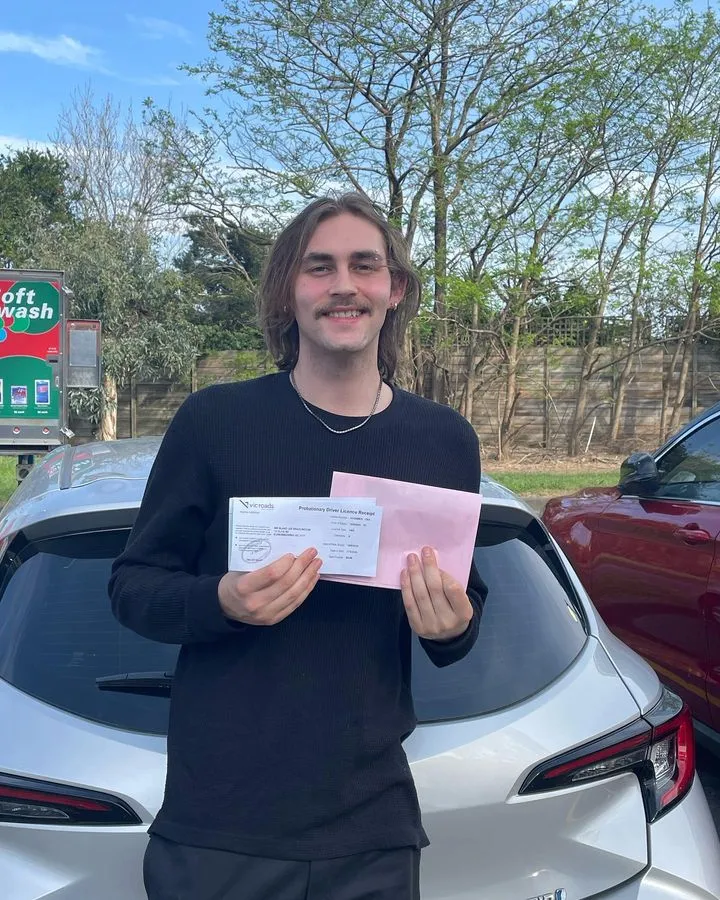
Pakenham driving test success requires mastery of the VicRoads Pakenham East License Testing Center routes and examiner expectations. Your Local Driving Academy structures preparation to build the specific skills examiners assess. Familiarity with local road conditions, roundabouts, and speed zone transitions directly reduces test-day errors.
Key Takeaways
- The VicRoads Pakenham drive test splits into two stages, each requiring independent passing.
- Stage one tests low-speed maneuvers in residential streets; stage two covers higher-speed roads and complex intersections.
- School zones, multi-lane roundabouts, and commercial precincts form the core environments examiners assess.
- The Prince Henry Drive and Exchange Drive corridor presents complex traffic flows used to evaluate real-world decision-making.
What Does the Pakenham Drive Test Involve?
The VicRoads Pakenham drive test evaluates practical driving competence through a structured two-stage assessment. Candidates begin at the official VicRoads Pakenham Hub in the Southeast Boulevard and Commercial Drive precinct. This location provides access to a variety of roads and traffic environments essential for thorough evaluation. Without familiarity with the test structure, learners risk failing on preventable technical errors.
What is the two-stage test structure in Pakenham?
The assessment divides into distinct stages that measure different competencies. Stage one focuses on low-speed maneuvers and vehicle control in quieter residential streets. Stage two progresses to higher-speed roads, complex intersections, and multi-lane roundabouts. Each stage must be passed independently. A critical error in either stage results in an immediate termination of the test.
Which roads feature in the Pakenham test routes?
Examiners select from routes that incorporate the full range of traffic conditions surrounding the Pakenham Hub. Candidates encounter school zones, shopping center traffic, and major arterial roads. The VicRoads Pakenham test routes include several high-failure roundabouts and lane-change sequences that demand precise observation. Professional instructors familiar with these specific routes provide a measurable advantage during preparation.
Driving Test Preparation Tips Pakenham begin with mastering the local road network. The testing area demands competence across four core environments:
- Residential streets with parked vehicles and limited visibility
- Multi-lane roundabouts requiring gap selection and signaling discipline
- School zones with variable speed limits during designated hours
- Commercial precincts with pedestrian activity and frequent stopping
Candidates who train exclusively on quiet streets develop a false sense of readiness. The test deliberately exposes gaps in hazard perception and speed management. Structured preparation that replicates actual test conditions reduces the probability of a repeat attempt.

How Should You Prepare Before Test Day?
Preparation for the Pakenham driving test demands structured, methodical practice. Understanding the local test environment, road conditions, and examiner expectations is crucial to passing with confidence on the first attempt. Candidates who neglect route-specific preparation risk failing on unfamiliar roads.
Driving Test Preparation Tips Pakenham begin with mastering the test area itself. The VicRoads Pakenham East License Testing Center sits within a network of roads that feature specific challenges. These include multi-lane roundabouts, school zone speed variations, and high-traffic intersections. Mastering the key Pakenham driving test routes improves readiness and increases the chance of success. A learner who practices these routes repeatedly builds automatic responses to common hazards.
What should a learner practice in the week before the test?
Focus shifts to consolidation, not new skills. The final week requires repeated runs through known test routes, with attention to speed management and observation checks. Parallel parking and three-point turns need practice until they become mechanical. A single session with a professional instructor during this period identifies lingering errors that self-taught learners often miss.
How does professional instruction improve test readiness?
Structured, one-to-one driver education across automatic and manual vehicles provides calibrated feedback. Your Local Driving Academy delivers this through a step-by-step learning framework that targets the specific demands of the Pakenham testing environment. Instructors familiar with local examiner expectations correct bad habits before they become test-day failures. Learners who combine solo practice with professional Pakenham driving lessons close skill gaps that route memorization alone cannot fix.
The night before the test, preparation turns logistical. Confirm the vehicle’s roadworthiness, check indicator and brake light function, and ensure the fuel level is adequate. Gather required documents: learner permit, logbook with completed hours, and any medical clearance forms. A full night’s sleep matters more than last-minute cramming. Arrive at the testing center 15 minutes early with a calm, focused mindset.
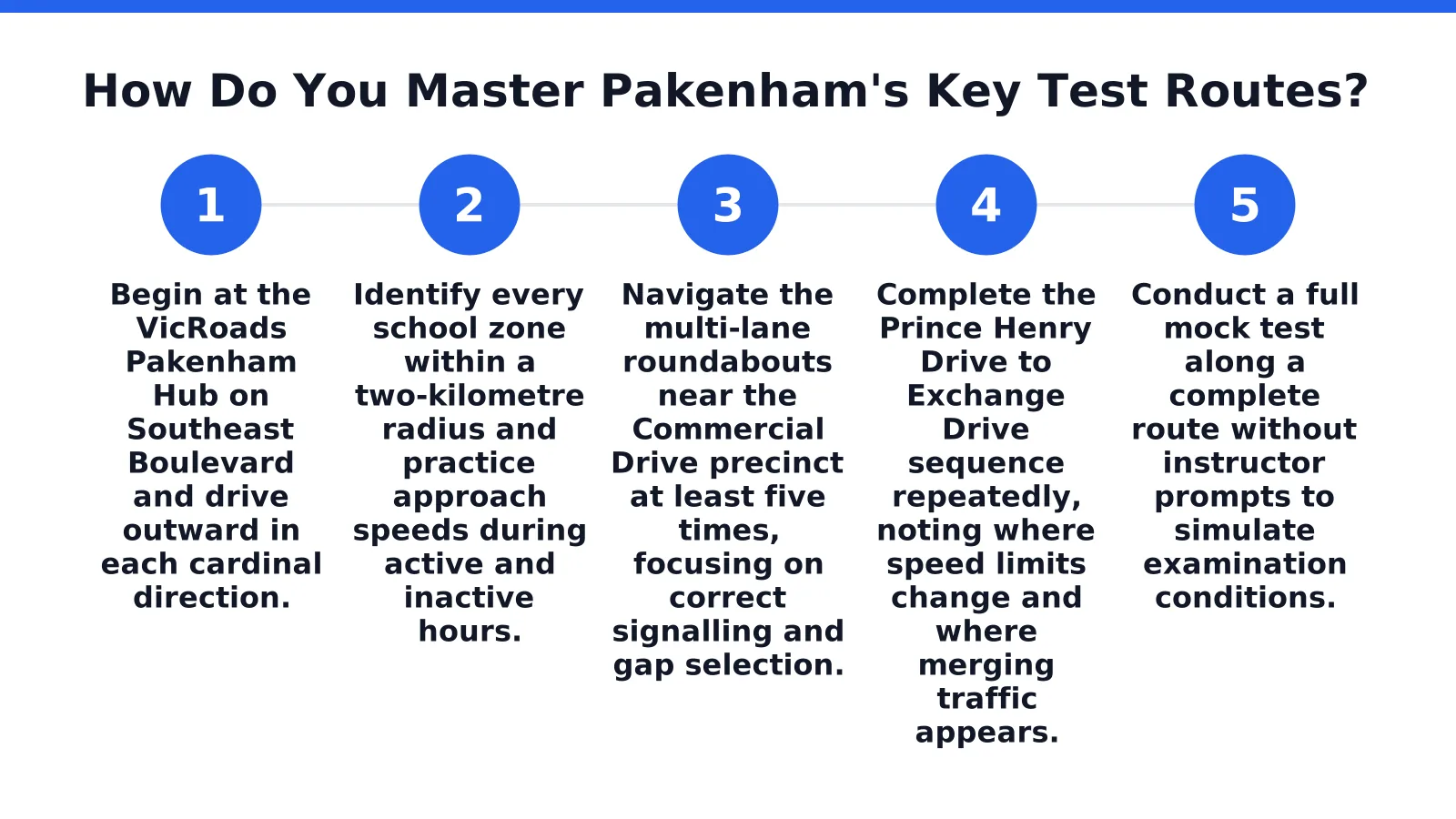
How Do You Master Pakenham’s Key Test Routes?
Mastering Pakenham’s driving test routes demands systematic preparation on the specific roads radiating from the VicRoads hub. The official testing center sits in the Southeast Boulevard and Commercial Drive precinct, providing access to a diverse network of roads and traffic environments essential for thorough assessment. Candidates who neglect route-specific practice risk accumulating critical errors on unfamiliar intersections and speed zones.
The testing area presents several high-stakes challenges. School zones demand precise speed compliance during designated hours. Multi-lane roundabouts test observation and lane discipline under pressure. The Prince Henry Drive and Exchange Drive corridor introduces complex traffic flows that examiners use to evaluate real-world decision-making. Without deliberate exposure to these locations, learners forfeit the confidence that comes from knowing exactly what lies ahead.
What Makes the Pakenham Test Environment Uniquely Challenging?
The Pakenham testing area combines residential streets, arterial roads, and commercial precincts in a single assessment loop. This variety forces candidates to transition rapidly between different speed limits and traffic densities. Examiners select routes that expose gaps in hazard perception, particularly where lane markings change or traffic merges unexpectedly.
How Should Learners Structure Route Practice Sessions?
- Begin at the VicRoads Pakenham Hub on Southeast Boulevard and drive outward in each cardinal direction.
- Identify every school zone within a two-kilometre radius and practice approach speeds during active and inactive hours.
- Navigate the multi-lane roundabouts near the Commercial Drive precinct at least five times, focusing on correct signalling and gap selection.
- Complete the Prince Henry Drive to Exchange Drive sequence repeatedly, noting where speed limits change and where merging traffic appears.
- Conduct a full mock test along a complete route without instructor prompts to simulate examination conditions.
Practical test-route familiarity and real-world hazard awareness build skills and confidence efficiently. Your Local Driving Academy structures lessons around these exact routes, ensuring learners encounter every intersection and traffic pattern before test day. A detailed breakdown of the specific roads and examiner expectations appears in the VicRoads Pakenham East test route guide. Consistent, structured progression through these environments transforms route knowledge from a memorization exercise into genuine driving competence.
What Are the Most Common Test-Day Mistakes?
Test-day mistakes in Pakenham typically fall into two categories. Some errors trigger immediate failure. Others accumulate points until the test ends unsuccessfully.
Why do candidates fail for critical driving errors?
Automatic fails occur when a learner commits a dangerous action. Running a stop sign or causing a near-collision ends the assessment instantly. VicRoads testing criteria identify these as immediate termination errors. No second chance follows; the examiner intervenes and the test concludes. Learners in Pakenham face identical consequences for these high-risk mistakes.
How does poor vehicle control affect test results?
Examiners assess control from the moment the vehicle moves. Hesitation at intersections signals uncertainty. Wide turns suggest poor spatial judgment. Abrupt braking indicates inadequate hazard scanning. Demonstrating confident control on city streets is a core requirement. Without it, minor deductions accumulate rapidly. A learner who appears tentative or reactive rather than proactive rarely meets the passing threshold.
What maneuver causes the most test failures?
Parallel parking remains the single most common point of failure. Mastering this maneuver within a confined space is essential. Many Pakenham learners practice parking between stationary objects. Test day introduces moving traffic and time pressure. The combination overwhelms unprepared candidates. Driving Test Preparation Tips Pakenham emphasize repeated practice on actual test-route streets. Familiarity with common driving test mistakes helps learners anticipate these pressure points before the assessment begins.
How Can Professional Lessons Improve Your Results?
Professional driving instruction delivers measurable test outcomes through structured methodology and vehicle familiarity. Your Local Driving Academy’s structured preparation approach builds the skills examiners assess, giving learners a systematic path to readiness.
The difference begins with the vehicle itself. Lessons are conducted in modern dual-control cars with high safety ratings. This equipment provides a controlled environment where instructors can intervene instantly, preventing dangerous situations before they develop. Learners build confidence without the fear of unrecoverable mistakes.
What makes instructor-led practice more effective than learning with family?
Accredited, friendly instructors provide patient, professional guidance to each learner. Unlike family supervisors, professional instructors follow a formal step-by-step framework that addresses gaps systematically. They identify bad habits early and correct them before those patterns become ingrained.
How does a professional drive test package reduce failure risk?
Drive test packages include instructor vehicle use, pre-test warm-ups, and pick-up/drop-off options. Using the same dual-control car for both lessons and the test eliminates the disorientation of an unfamiliar vehicle. The pre-test warm-up sharpens focus immediately before the examiner arrives. Pick-up and drop-off services remove logistical stress on test day.
The structured approach extends across four progressive service tiers: Just Beginner, Intermediate, Experienced, and Touch & Pass. Each level targets specific competency milestones. Learners who complete the full progression arrive at the VicRoads Pakenham testing center with documented readiness. The academy’s driving lesson packages align directly with these progression stages, ensuring no skill gap remains unaddressed before test day.
Driving Test Preparation Tips Pakenham candidates benefit most from route-specific practice. Instructors familiar with Pakenham’s testing corridors teach the exact intersections, speed zones, and hazard points examiners prioritize. This local knowledge converts abstract driving skills into test-ready performance.
FAQ
What does the Pakenham drive test involve?
The VicRoads Pakenham drive test is a two-stage assessment starting at the official VicRoads Pakenham Hub. Stage one covers low-speed maneuvers in residential streets, while stage two tests higher-speed roads, complex intersections, and multi-lane roundabouts.
Which roads feature in the Pakenham test routes?
Examiners select routes that include school zones, shopping center traffic, and major arterial roads. The routes feature high-failure roundabouts and lane-change sequences, including the Prince Henry Drive and Exchange Drive corridor.
How should you prepare before test day?
Preparation requires structured practice on the local road network, including residential streets, multi-lane roundabouts, school zones, and commercial precincts. Training only on quiet streets creates a false sense of readiness, so replicate actual test conditions with professional instructors familiar with the routes.
Conclusion
Structured preparation on Pakenham’s specific test routes, combined with professional instruction in a dual-control vehicle, transforms route knowledge into genuine driving competence. Learners who complete a full progression of targeted lessons arrive at the VicRoads Pakenham testing center with documented readiness, eliminating skill gaps and reducing failure risk from common errors like parallel parking or hesitation at intersections. This systematic approach converts practice into test-day success.